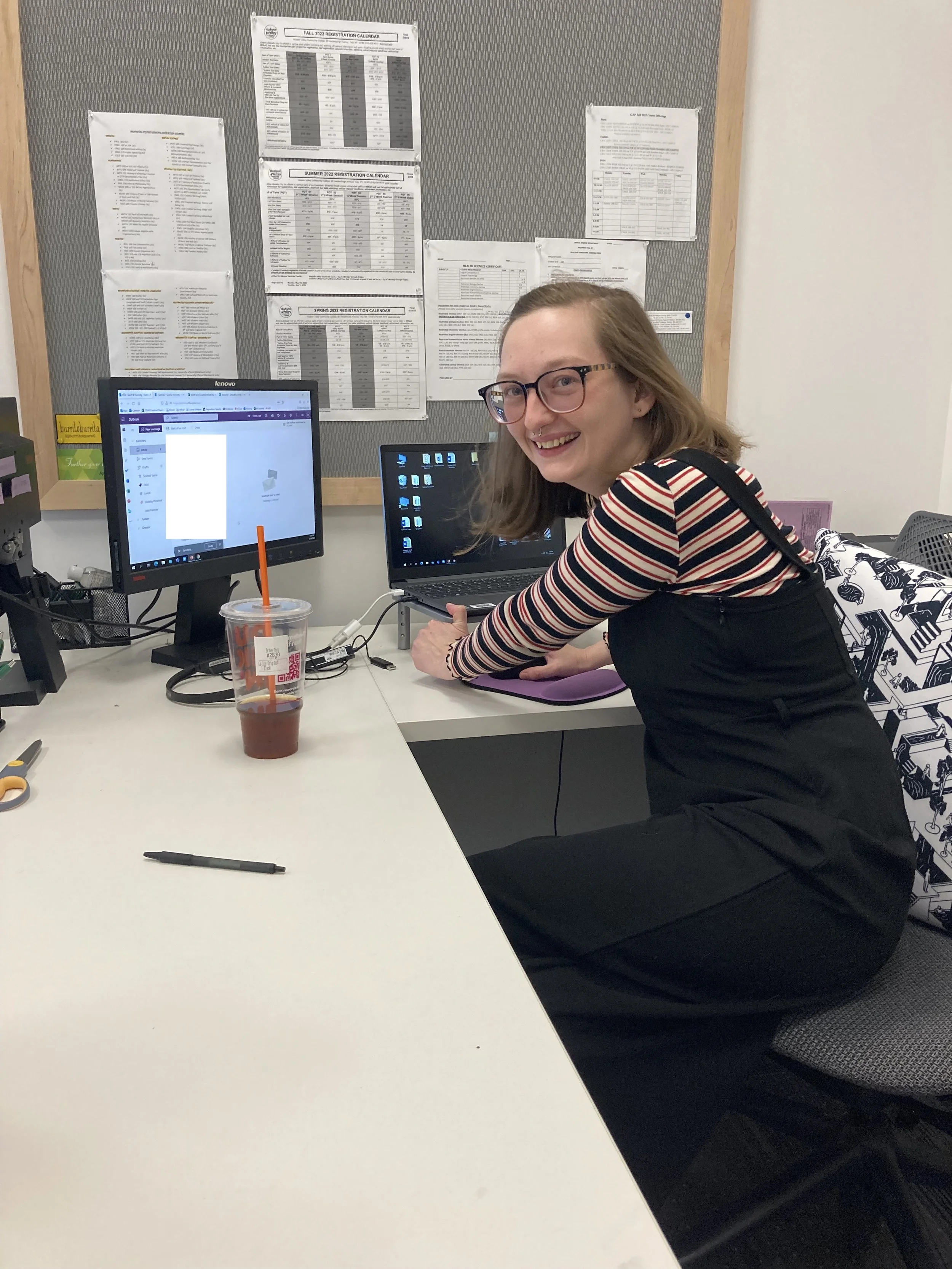
Pictured above in my first full-time academic advising role: I met with hundreds of incredible students at this desk, all there for their own reasons and on their own paths forward.
Academic advising makes higher education make sense for students.
My personal advising philosophy follows a dialogic or dialectical approach that centers students’ own goals for their education, career, and life paths.
Drawing from my customer service experience in tourism and extensive academic background in rhetoric and argumentation, I meet students where they are when they arrive at my virtual or in-person office. I listen to each student’s specific goals and use my knowledge and experience to nonjudgmentally guide them to appropriate resources, courses, and opportunities as well as through other academic decisions. Through conversation, I seek to understand what exactly students aim to receive from their educational experience and follow their lead to offer appropriate guidance.
Above all, I understand when talking with a student or a colleague that I am speaking with a full person for whom education is just one part of their life, so my advising approach takes a holistic view.
Dr. Kennedy’s Advising Philosophy
My path to academic advising
Undergraduate in need of advising
Elizabethtown College, 2012I was beyond lucky to have amazing undergraduate faculty advisors. I started in the Honors Program with a first-year academic advisor from the Psychology department who helped me navigate my adjustment to college and an early major change while getting to know me as a student in our first-year seminar course, Identity, Diversity, and Social Justice. I ended up declaring a Psych minor and kept Dr. Smith as an advisor through my graduation in 2015 (pictured).
When I receive a long email from an advisee, I remember my emails to Dr. Smith and know how much thoughtful responses balancing guidance and affirmation can do for a person.
Elizabethtown College’s motto is Educate for Service, and I am so proud to be an alumna. I wear a pin with the College seal and motto to my presentations and interviews to give me the power of all the generous and caring people who inspired me to be the higher education professional I am now.
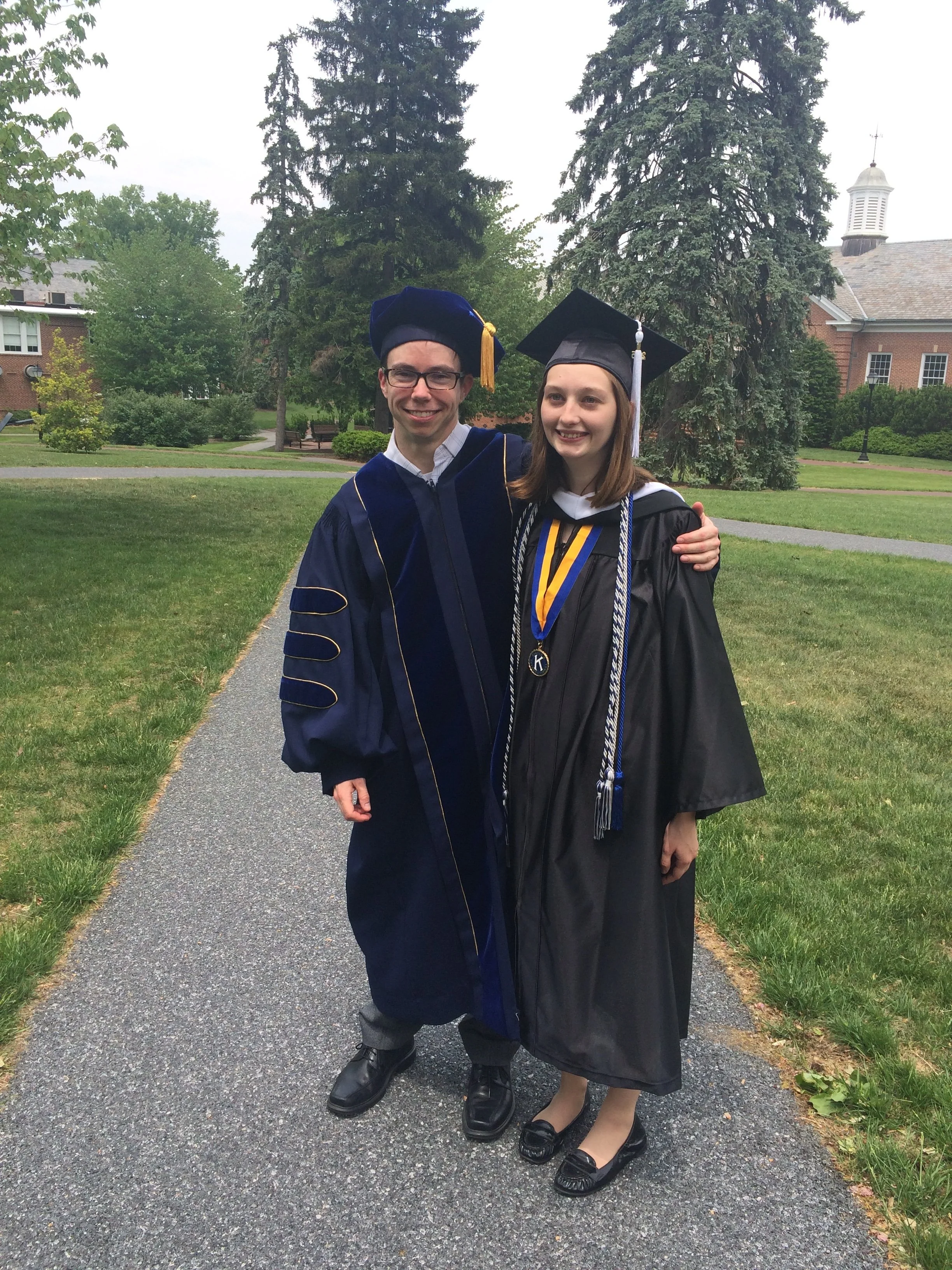
Dr. T. Evan Smith ran across campus on my graduation day to bring me cords I earned as a member of the Psych honors society that I hadn’t received on time. Dr. Smith’s pre-ceremony sprint back to the Psych department was one of many moments an academic advisor went above and beyond for me.
Aspiring academic
Elizabethtown College & Penn State, 2015My faculty advisor in the English department, Dr. David C. Downing, inspired me to become an English Composition professor. He introduced me to rhetorical studies, helped me complete my degree in three years, and took me seriously as a colleague, academic, thinker, and writer in a way that changed my life.
With Dr. Downing’s support, I joined the Interdisciplinary Humanities program at Penn State, where Dr. Glen Mazis opened my world with phenomenology, the study of experience that shaped my approach to rhetorical studies as a scholar. At Penn State, Drs. Rodney Zink and Troy Thomas brought my analytical and writing abilities to the next level and were a constant source of support as I applied to Ph.D. programs.
In 2016, I moved to Troy, NY, to start my doctoral work under the supervision of more communication scholars and supportive advisors: I was lucky to have Drs. Tamar Gordon and Ellen Esrock as my dissertation co-chairs.
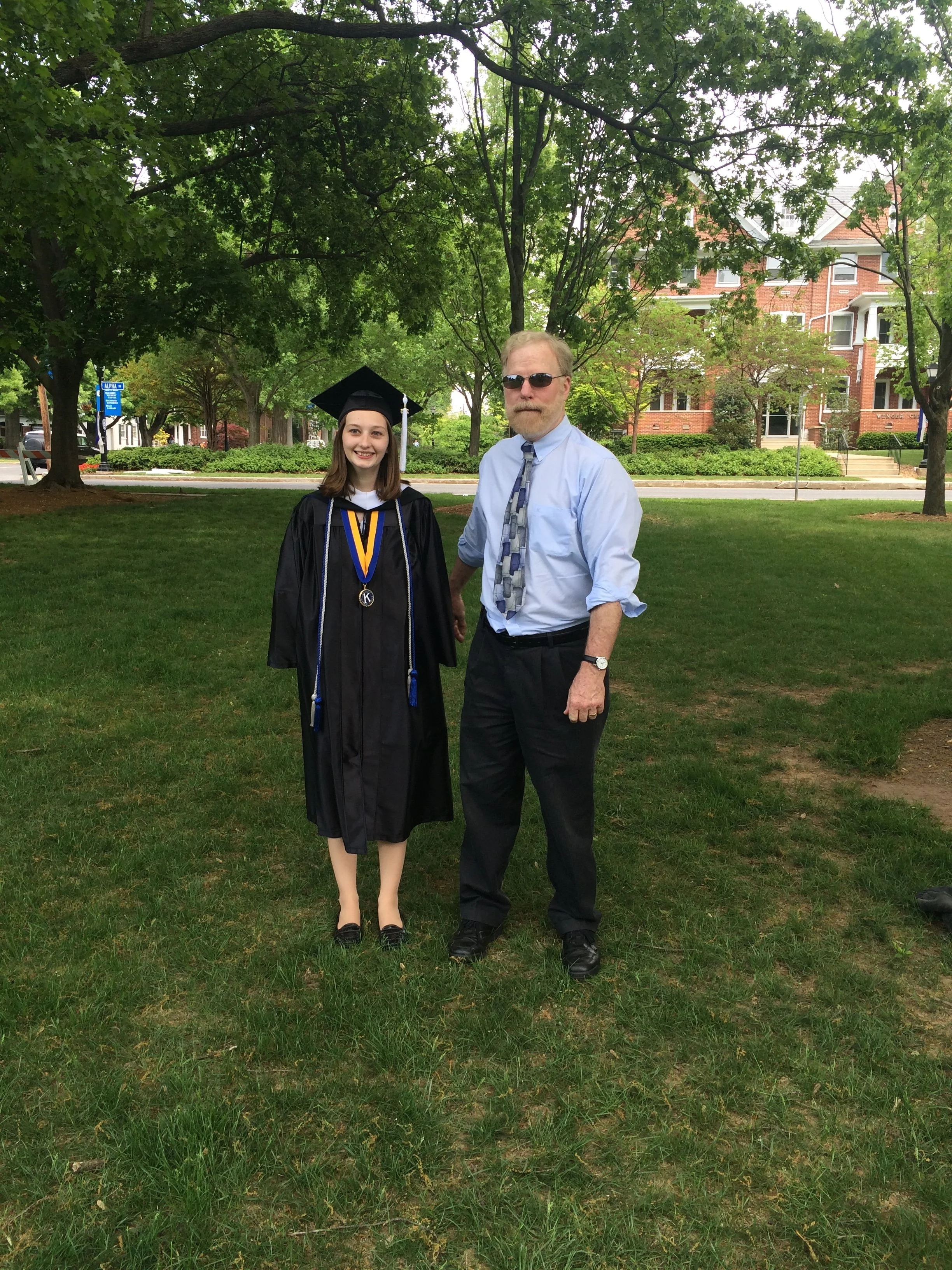
Dr. Downing remains one of the coolest people I’ve ever met.
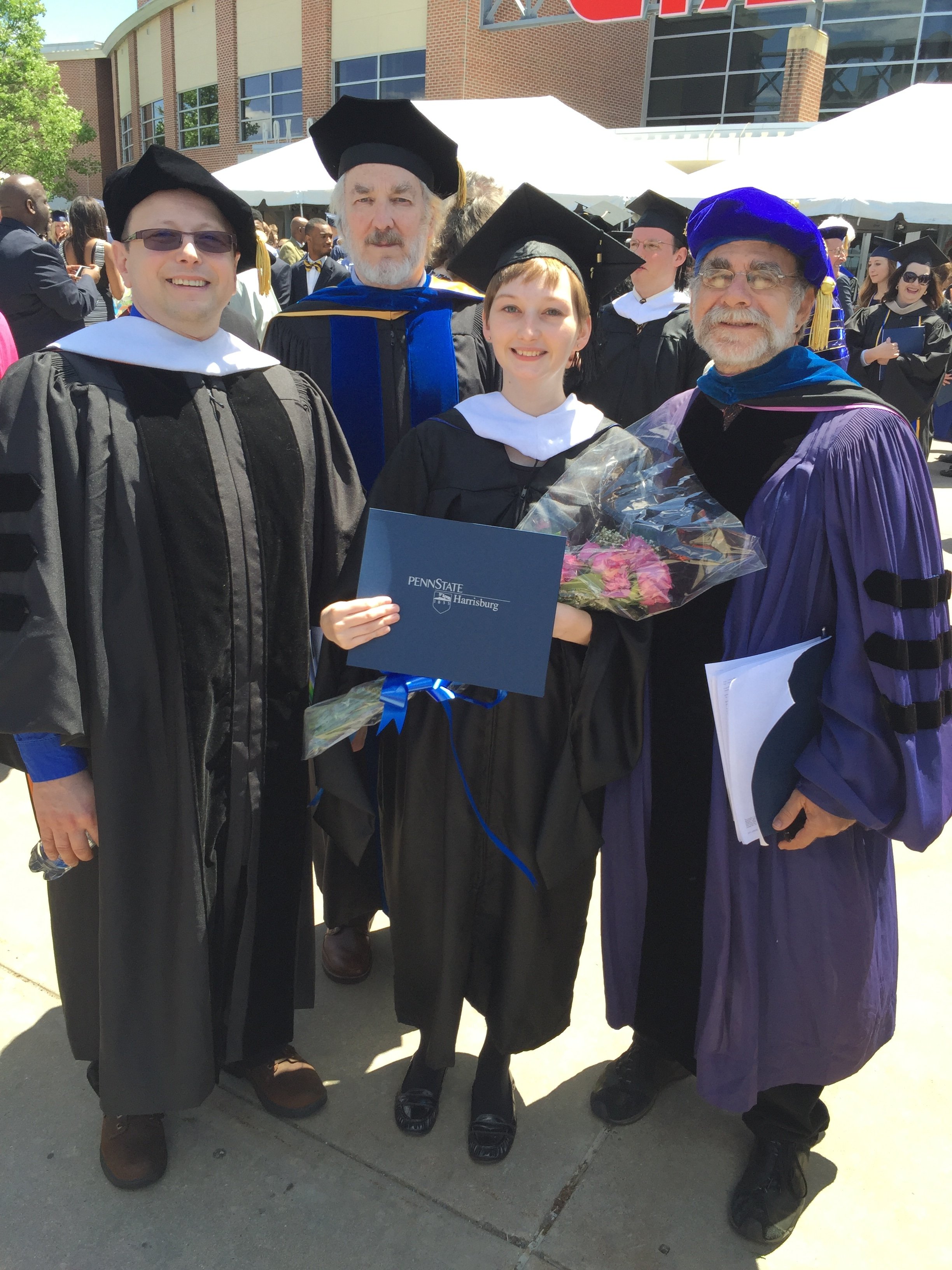
The whole humanities faculty had my back at Penn State Harrisburg.
Writing tutor
Elizabethtown College, Penn State, Rensselaer Polytechnic Institute 2013-2019While pursuing each of my degrees, I also worked as a writing tutor, holding individual and group consultations on writing projects and presentations. I spent the bulk of my teaching assistantship time as a Ph.D. student working in RPI’s Comm+D Center for Global Communication + Design, where I honed my skills as an academic administrator and writing instructor. This turned out to be perfect training for the type of day to day work academic advisors do! My writing center experience continues to inform my hands-on, individualized, and process-oriented approach to writing instruction now that I am instructor of record for my own English Composition courses.
Rhetorician
Rensselaer Polytechnic Institute 2015-2021Assessing and using the available means of persuasion to guide souls to Truth is at the heart of my advising, teaching, and movement through the world.
My academic background has made me a strong communicator and persuasive voice, which has served me well as an academic administrator. When advising students, I certainly adhere to NACADA’s mantra “I advise; you decide!” but likewise see the value clear communication and the ability to break down complex processes and requirements has in academic advising.
Academic advisor, academic administrator, lifelong learner
After completing my Ph.D. in Communication and Rhetoric at Rensselaer Polytechnic Institute in 2021, I became an academic advisor at Hudson Valley Community College, where I managed a caseload of over 400 matriculated Individual Studies students and taught introductory College Forum courses. Academic advising was a deeply rewarding role for me, and my writing center background translated well and positioned me to quickly enhance processes and materials to assist with the most frequent questions and needs we saw students bring to advising.
As I grew as an academic advisor, I found my own experiences with and beliefs about higher education alternately affirmed and challenged both in my students’ experiences and in my and my advising colleagues’ role within the larger university. My Individual Studies students taught me an immense amount about what brings a person to higher education and the opportunity we as educators and administrators have to transform the lives of learners coming to us at the right time for them. I started exploring academic administration opportunities to have a louder voice as an advocate for students as well as academic advisors, and I joined my current university in 2022 in an advising liaison role representing global first-year programs.
I love working closely with academic advisors across subject matter areas and degree programs and hearing what brought them to this work. Their stories are often similar to mine: someone believed in and listened to us, and we are honored to do the same for students today.
2021-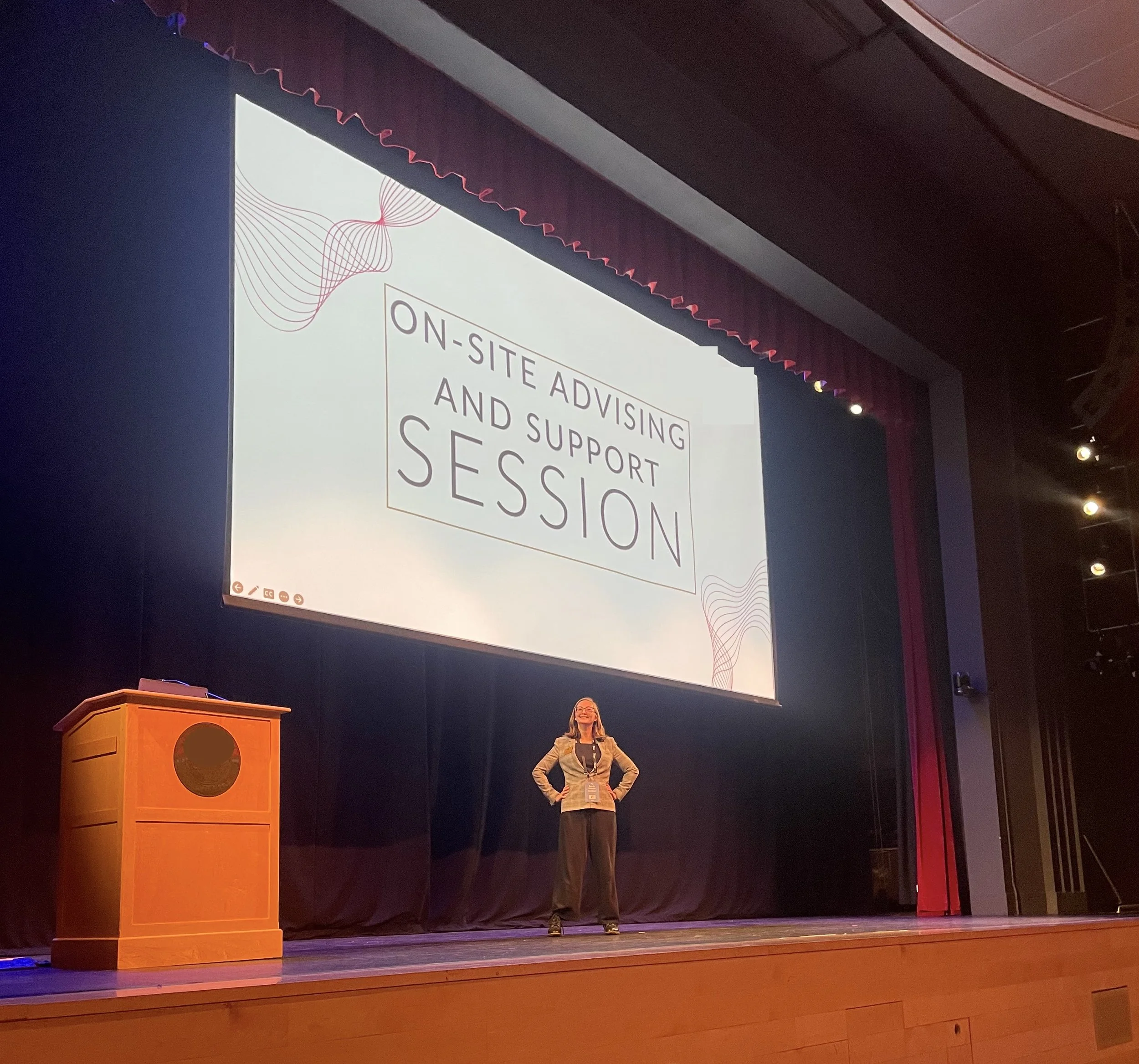
Pictured above presenting to incoming first-year students and their families about academic advising support resources at summer pre-departure orientation, 2025.